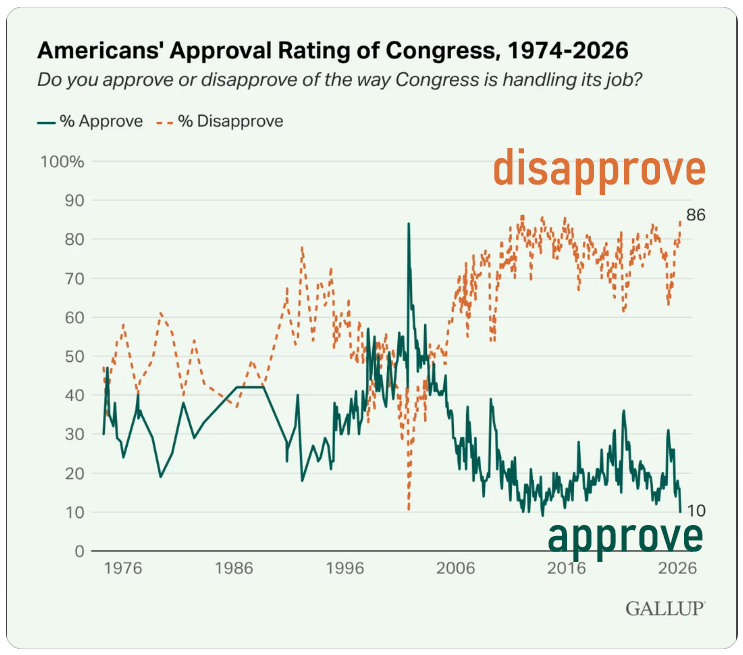
The movement for accountability is hitting a fever pitch. As we look toward the 2026 election cycle, the data confirms what we’ve known all along: term limits are the most effective tool for ensuring a “citizen legislature” and preventing the rise of a permanent political class.
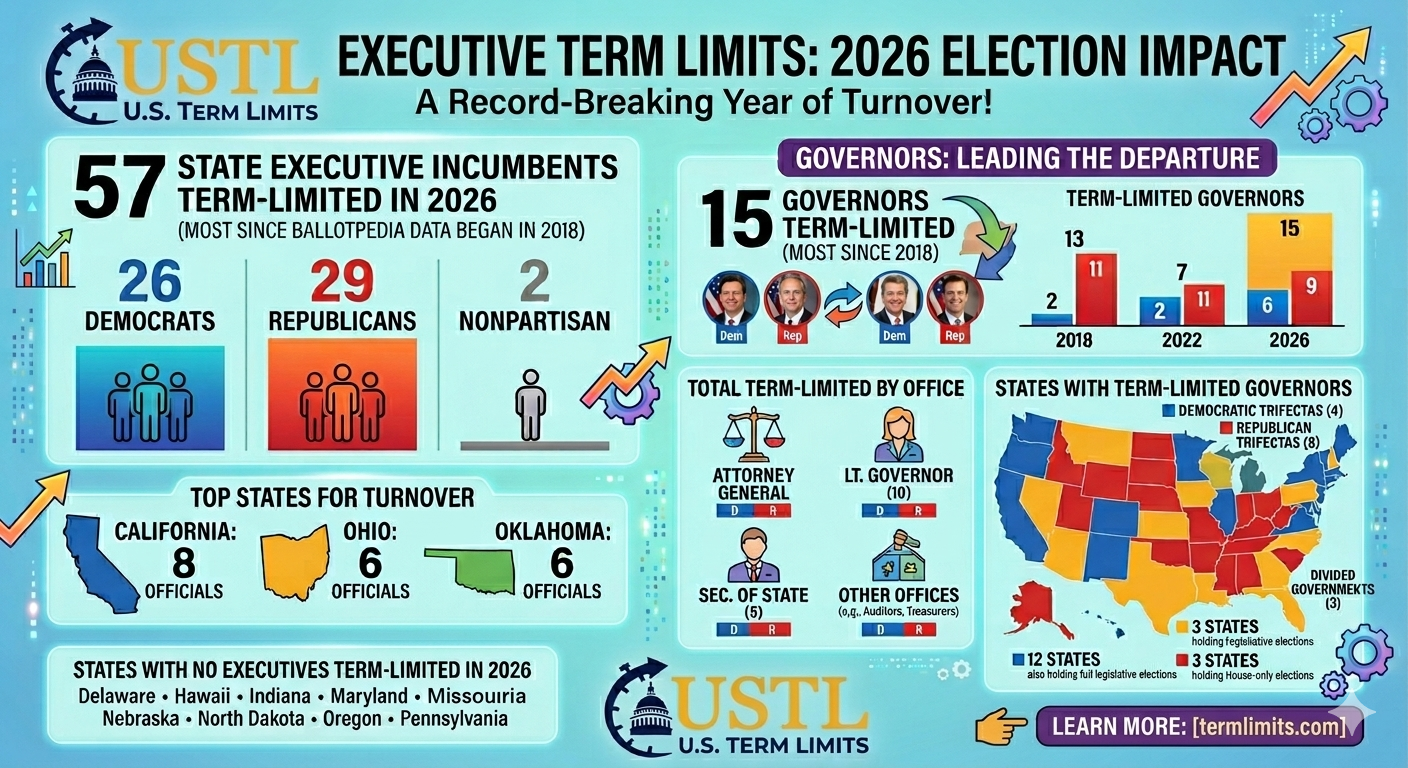
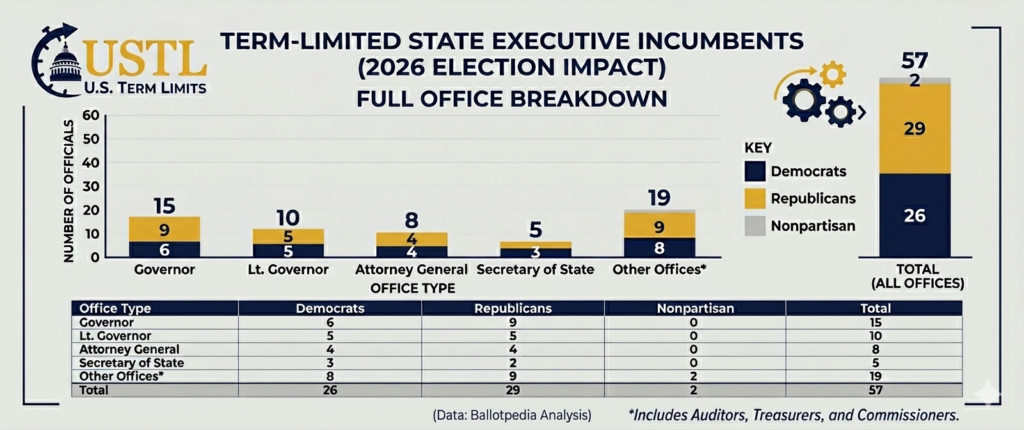
According to new data from Ballotpedia, a record-breaking 57 state executive incumbents are ineligible to run for re-election in 2026 due to term limits. This includes 26 Democrats, 29 Republicans, and two nonpartisan officeholders. This is the highest number of term-limited state executives recorded since data collection began in 2018.
Governors Leading the Departure
The impact is felt most acutely at the top. There are 15 governors termed out this year—the most in nearly a decade. For comparison, only seven governors were term-limited in 2022.
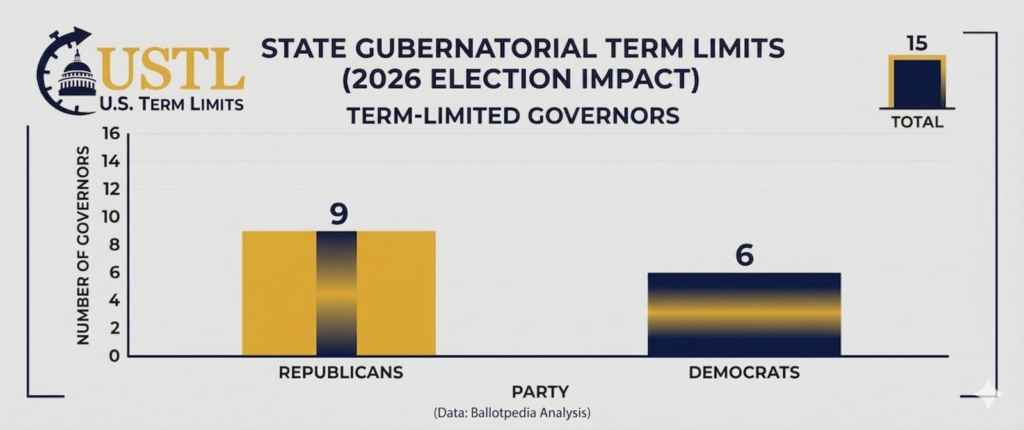
These 15 open seats represent a massive opportunity for fresh faces and new ideas to enter state mansions, free from the stagnant grip of multi-decade incumbency.
A National Snapshot: Who is Term-Limited?
Incumbents across 15 different types of offices—from Attorneys General to State Treasurers—are reaching their limits.
The State Impact: California, Ohio, and Oklahoma
While term limits are refreshing leadership across the country, some states are seeing a total transformation:
- California: Leads the nation with eight state executive officials termed out.
- Ohio & Oklahoma: Follow closely with six officials each.
- The “Lull” States: Nine states, including Pennsylvania, Oregon, and Indiana, will see no executive term limits triggered this cycle, reminding us why our work to defend and expand these limits is never finished.
Why This Matters
Term limits create a level playing field. Without them, incumbents enjoy a massive fundraising advantage and name recognition that makes them nearly impossible to unseat. By ensuring regular turnover, we break the monopoly of career politicians and return power to the people.
As these 57 officials prepare to step down, we are reminded of our ultimate goal: bringing this same accountability to the U.S. Congress. If it works for 15 types of state offices and dozens of governors, it’s time to make it work in Washington, D.C.
Click here to learn more on how you can facilitate change!