
Congress has once again packed its bags and headed out on recess. But before lawmakers left Washington to campaign and meet with donors, did they actually pass a federal budget for the upcoming fiscal year?
No. Instead, they relied on their favorite safety net: a Continuing Resolution (CR) to keep the lights on until December.
To the average American, passing a Continuing Resolution might sound like Congress doing its job. In reality, a CR is an admission of failure. It simply copy-pastes last year’s spending levels, temporarily staving off a government shutdown while kicking the most fundamental responsibility of governance down the road.
Funding the Government Is the Baseline Job
While the U.S. Constitution assigns Congress several major responsibilities—from declaring war to confirming presidential appointments—funding the government through the appropriations process (Article I, Section 9, Clause 7) is its primary operational duty.
Yet, meeting the statutory October 1 fiscal deadline has become the exception rather than the rule. Decades-long career politicians have transformed budget season into a predictable annual melodrama: miss the deadline, pass a stopgap CR, go on recess, and repeat.
If a private-sector executive failed to deliver their organization’s baseline budget on time year after year, they wouldn’t get a vacation—they would get fired. But in Congress, where incumbents enjoy massive structural advantages and decade-spanning careers, failing to do the job carries zero consequences.
Why Entrenched Politicians Love “Governance by Extension”
Relying on CRs isn’t just bad management; it’s a symptom of a broken incentive structure:
Zero Accountability: Permanent incumbents know that kicking the can down the road won’t cost them at the ballot box. Re-election rates remain sky-high regardless of whether a budget passes on time.
Prioritizing Recess Over Results: Statutory deadlines are routinely brushed aside to protect recess schedules and campaign fundraising calendars.
Crisis-Driven Power Grab: By pushing the true deadline to December, congressional leadership sets up a winter “lame-duck” crisis, forcing members to vote on thousands of pages of spending with virtually no time for debate.
Citizen-Legislators Would Treat Deadlines Differently
When lawmakers view holding office as a lifelong career, protecting their political position becomes the top priority, while doing the actual work of governing becomes an afterthought.
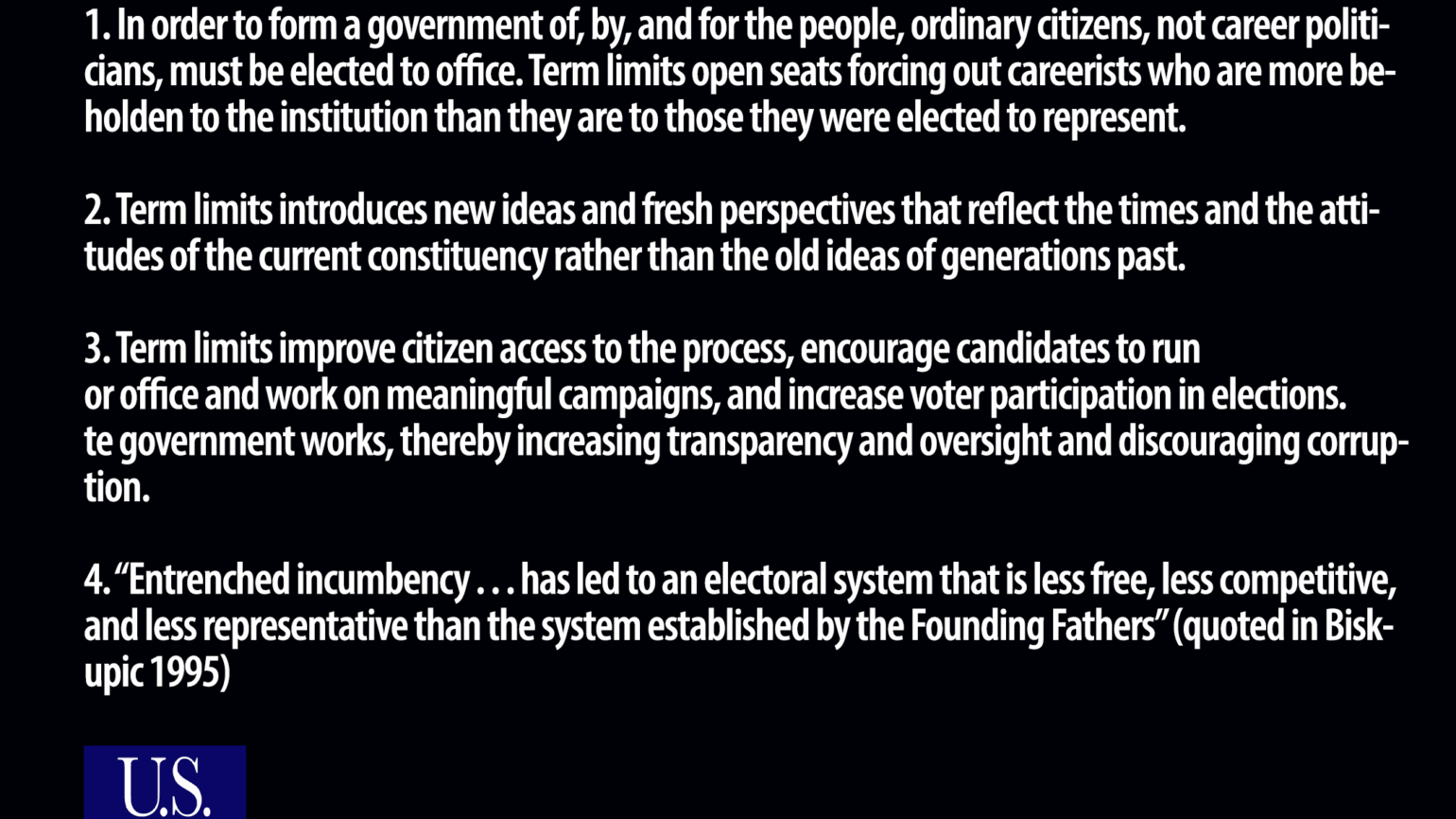
Term limits break this cycle. Citizen-legislators who enter Congress knowing their time is limited don’t have decades to kick decisions down the road. They operate with a sense of urgency, knowing they will soon return home to live under the very laws and financial policies they enacted.
Passing a real, deliberate budget on time shouldn’t be a heroic achievement—it should be the bare minimum standard for holding office. Until we implement congressional term limits, career politicians will continue treating their core constitutional duty as optional, while “governance by extension” remains business as usual.