
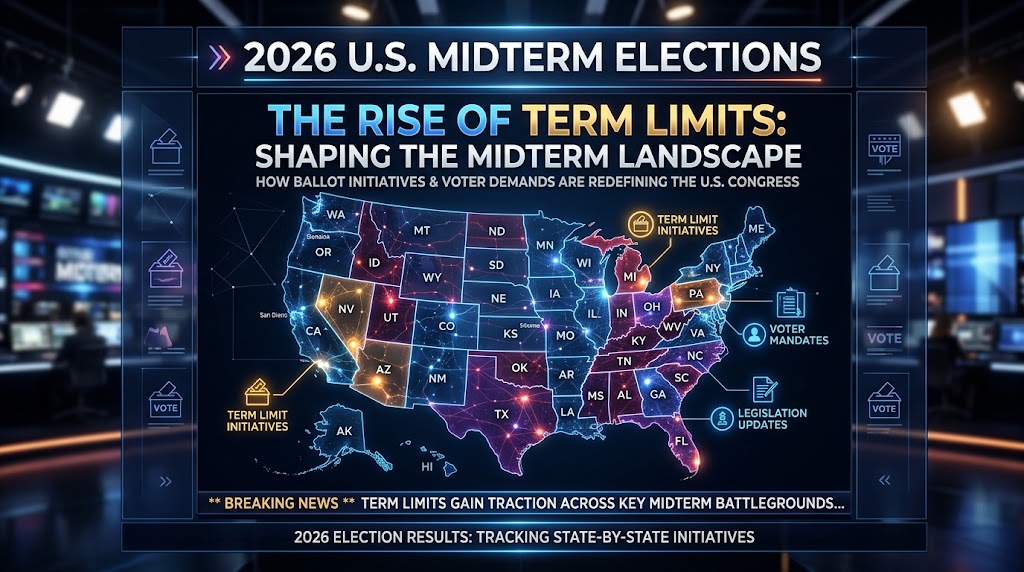
Election night will help determine who carries the term limits debate into the next legislative session—and, in some communities, how long elected officials can remain in office.
U.S. Term Limits is watching three parts of that story: pledge signers in state legislative races, congressional signers, and local ballot measures that establish, strengthen, weaken or repeal limits on service.
While we are preparing to introduce congressional term limits resolutions in more than a dozen states in 2027, our current state priorities are Wyoming, Georgia, Nebraska, New Hampshire, Montana, Idaho, Alaska and Texas. We are paying particular attention at the state results for candidates who have signed the state congressional pledge and assess what the incoming legislatures mean for the next stage of the term limits effort.
A signer’s election is an opportunity to turn a campaign commitment into legislative action. As results become clear, we will distinguish returning lawmakers from newly elected members and identify where pledged supporters will be positioned to advance the issue.
In congressional races, our focus is on candidates who signed the congressional pledge. Freshman Democrats deserve particular attention as we examine support across party lines and the potential for new voices to help move congressional term limits forward. We’ll be watching the U.S. Senate races in Alaska and Maine closely, where Democratic challengers face incumbents Sen. Dan Sullivan, who opposes congressional term limits, and Sen. Susan Collins, who broke her pledge to support them. Both challengers, Mary Peltola and Troy Jackson have committed to cosponsoring our term limits resolution in Congress. Returning signers also matter: the next Congress will include both lawmakers defending their seats, senators who were not up for election today, and newcomers bringing their commitments to Washington.
Winning a seat and delivering on a pledge are separate milestones. Our election coverage will track the first; the work that follows will focus on the second.
Local ballot questions offer a different kind of decision. Voters can directly change the rules governing service in their own communities. These measures require close attention to the actual ballot language: a proposal that lengthens a single term does not necessarily impose a limit on the number of terms an official can serve.
In Lincoln, Nebraska, voters face competing proposals for City Council service: Question 4 would establish a limit of two consecutive four-year terms, while Question 5 would establish a limit of three consecutive four-year terms. Both deserve attention in a priority state. They must be reported separately, with the final legal effect explained once the results are clear. [1]
In Huntington Park, California, Measure HP proposes a two-term lifetime limit for City Council members and removes the provision that allows the count to restart after time out of office. That is a substantive change to limits on service. [2]
In East Palo Alto, California, Measure CC proposes a cap of three consecutive full council terms. Partial terms exceeding two years would count toward that limit. The final ballot language matters: earlier descriptions of a two-term proposal do not reflect the measure voters are deciding. [3]
Some proposals bundle term limits with other changes. Corvallis, Oregon’s Measure 2-159, for example, combines limits of three consecutive terms for the mayor and councilors with changes to council size, wards and council term length. Our follow-up will explain those components so readers understand what a vote actually changes. [4]
View all of the 2026 local term limits ballot initiatives we are tracking here: https://termlimits.com/2026-term-limits-ballot-initiatives/
As returns arrive, we will report which signers have won, which races remain unresolved, and what voters decided on actual term limits. The follow-up will keep new limits, stronger limits and efforts to weaken existing limits distinct. Each result represents a different next step for accountable government—and for holding elected officials to their commitments.
Our work goes well beyond election night. U.S. Term Limits invests substantial time and resources in building relationships with state legislators. We pair that work with data intelligence and detailed whip counts to identify where support is firm, which lawmakers remain undecided, and which committees need additional commitments. That preparation helps us focus our outreach where it can make the greatest difference and build the support needed for legislative success in 2027.
Article source links
- Lancaster County official November 3 sample ballot, page 3.
- Huntington Park: Learn About Measure HP.
- East Palo Alto official municipal election page.
- Corvallis official charter-amendment FAQ and ballot measure page.
